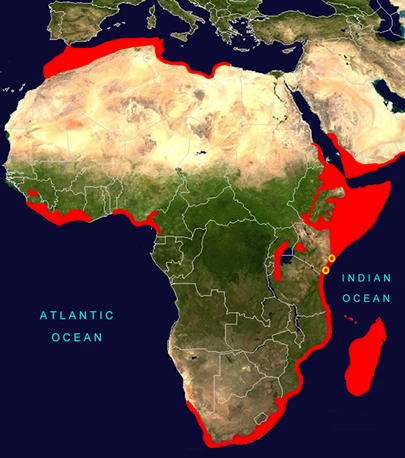
Too
few people know about the plight of one of the world's most
endangered
canids, the African
wild dog (Lycaon pictus)
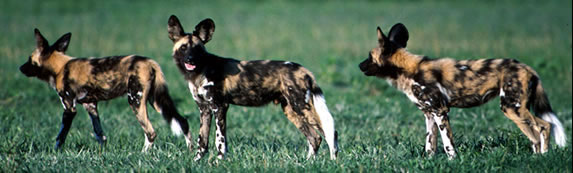
or Africa's "painted wolf." This unique pack-living canid,
with its large parabolic ears and mottled coat pattern of yellow,
white, and black, once ranged widely throughout Sub-Saharan Africa
in 39 countries. Today wild dogs have all but disappeared in 15,
with perhaps no more than 3,000 to 5,500 remaining. Their dramatic
decline is largely due to human persecution and habitat fragmentation.
The IUCN Species Survival Commission (SSC) Canid Specialist Group,
and American Zoo and Aquarium Association (AZA) Canid and Hyaenid
Taxon Advisory Group (TAG) regard African wild dogs as a high-priority
species for wildlife conservation. Their numbers according to
the IUCN Red List are decreasing.
Among
the top carnivores, wild dogs require large, ecologically diverse
areas to survive and may have a significant impact on the structure
and function of ecosystems. One of Africa's most efficient predators,
wild dogs help regulate prey species that in turn play a role
in shaping vegetation communities. Because of habitat requirements
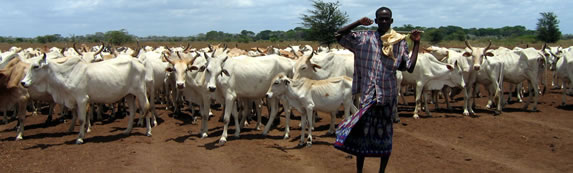
and ranging behavior, however, they are threatened by human
disturbance use of natural landscapes. Securing a future
for this species, therefore, is an essential part in stemming
the loss of biodiversity and preserving a healthy ecosystem.
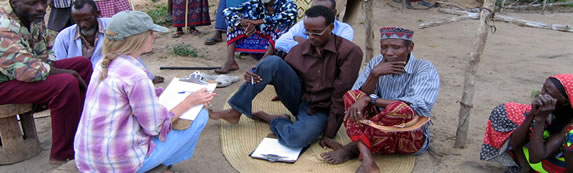
By working with people living with them, we hope to help secure
their long-term survival.
Having
lived and worked in the African bush for many years, we believe
that investing in people and taking an adaptive grassroots approach
are necessary to make wild dog conservation efforts sustainable
and indeed truly important to enable those most directly affected.
The African Wild Dog Conservancy's
community conservation project is in the
biodiversity hotspots of
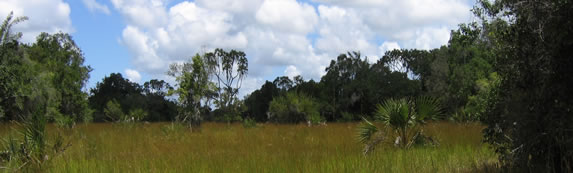
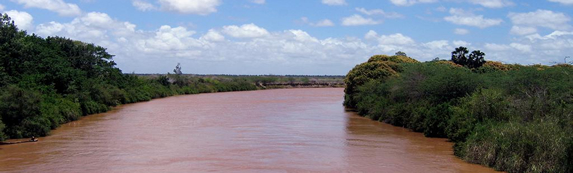
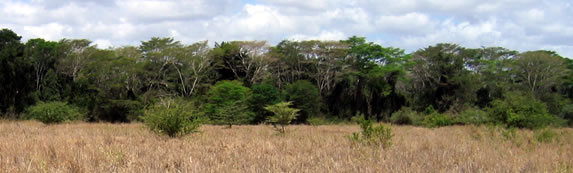
northeastern and coastal Kenya, a rich mosaic of protected areas
and community lands under extreme threat. One way our approach
differs from some other projects is that we have taken the time
to learn why many community-based conservation efforts have not
succeeded:
-
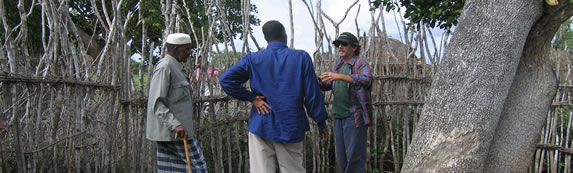
Our
project was started with the support of local people with
vision, who recognize that the well-being of wildlife, plants,
and people is interconnected, and that healthy ecosystems
improve livelihoods.
-
With
this in mind, baseline information on attitudes and concerns
is being collected to track project success, document and
learn from mistakes, and adapt as needed.
-
Time
is being taken to build good working relationships with local
people based on trust, recognizing that there will be bumps
along the road, and that conservation and development are
not always compatible. We are striving to interweave traditional
skills and knowledge, and cultural and religious perspectives
with conservation science, training, and education.
|
|
|
|
|
 |
|
|
About the African Wild Dog Conservancy
|
Started
in 2001, the African Wild Dog Conservancy is
a registered 501(c)(3) nonprofit dedicated to
working with local communities, and national
and international stakeholders to conserve wild
dogs through scientific research and education.
The conservancy's objectives are the following:
-
Establish
and support long-term conservation programs
involving local communities in research
and education
-
Facilitate
development programs aimed at improving
the lives of local people by building partnerships
with community-based organizations and NGOs
|
| |
|